Dana Reyes★ Contributor · Lv 4
3 months agoThe one productivity book that actually changed what I do every morning.
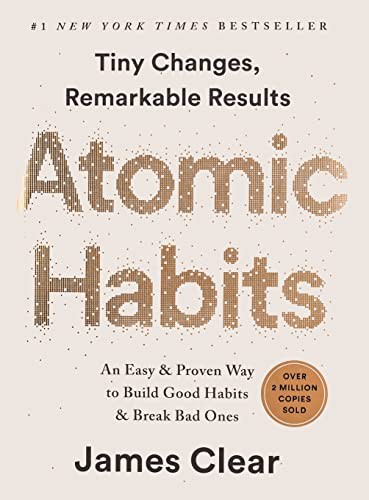
by James Clear
You do not rise to the level of your goals. You fall to the level of your systems.
Most people fail to change not because they lack willpower, but because they aim at goals instead of building systems. Atomic Habits is the operating manual for the second approach — tiny, compounding changes that make improvement automatic.
Habits are the compound interest of self-improvement: getting 1% better every day makes you 37× better in a year. Clear argues that lasting change comes from identity ("I am a runner"), not outcomes ("I want to run a marathon") — and gives a four-law framework to engineer any habit: make it obvious, attractive, easy, and satisfying.
In high school, Clear was hit in the face by a baseball bat and spent months relearning basic functions. Small, consistent routines carried his recovery — and later made him a top college athlete. He spent years turning that experience, plus behavioral-science research, into the framework he first tested on the 500,000 readers of his weekly newsletter.
You'll learn to change from the inside out: every action is a vote for the type of person you want to become, so the goal isn't to read a book — it's to become a reader.
A repeatable checklist — obvious, attractive, easy, satisfying — for building good habits, plus its inversion for breaking bad ones.
You'll see why the people with the best self-control use it least: they design surroundings where the right choice is the default.
Scale any habit down to two minutes to make starting effortless — master the art of showing up before you optimize the routine.
Why habits feel useless in week 3: results lag effort like ice melting at 31°F, and quitting there wastes stored progress.
British Cycling had won a single Tour de France in 110 years. Coach Dave Brailsford applied "the aggregation of marginal gains" — 1% improvements in everything from seat height to hand-washing — and within a decade the team won 5 Tours and dominated two Olympics.
A stockbroker moves a paper clip from one jar to another after every sales call — a physical "habit tracker" that made progress visible and turned 120 daily calls into a satisfying game.
The one productivity book that actually changed what I do every morning.