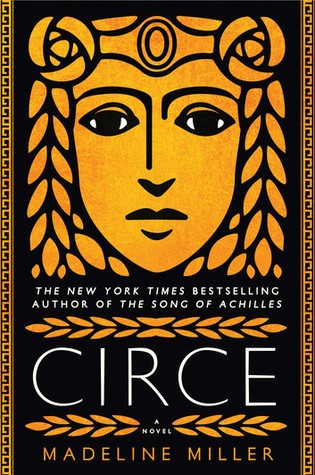
Circe
But in a solitary life, there are rare moments when another soul dips near yours, as stars once a year brush the earth.
Why read it
The witch from the Odyssey who turned sailors into pigs finally gets to tell her own story — and it turns out exile, not Odysseus, is the making of her. Miller gives Greek myth's most maligned woman a voice that burns off three thousand years of bad press.
Born a disappointment among gods — no beauty, no power, a voice like a mortal's — Circe discovers witchcraft, a power that isn't given but worked for. Banished to the island of Aiaia for it, she crosses paths with the Minotaur, Daedalus, Medea, and Odysseus while building the novel's real subject: a self, chosen deliberately, between the cruelty of gods and the brevity of mortals.
Miller, a Latin and Greek teacher for over a decade, spent seven years on the novel — returning to Homer, Ovid, and the lost epics to reassemble Circe's scattered appearances into one life. Published in 2018, it made witch-of-Aiaia a bestseller heroine and is being adapted for television.
- 01
A goddess learning on mortal time
Circe's power grows the way human skill does — through failure, repetition, and work — making her the rare immortal whose story has stakes.
- 02
The gods as they actually are
Miller's Olympians are glittering, bored, and casually vicious; the novel's quiet horror is how unremarkable their cruelty is to them.
- 03
Motherhood as transformation
The late chapters — raising a mortal son alone, against prophecy and Athena herself — turn the witch story into something rawer and more dangerous.
- 04
Famous myths from the corner of the eye
The Minotaur's birth, Icarus's fall, Odysseus's homecoming — you'll see canonical stories from the perspective of the woman the epics kept offstage.
Circe's first spell transforms a rival nymph into the sea monster Scylla — a moment of jealousy that will cost sailors' lives for centuries and that she spends much of the book trying to answer for.
When Odysseus's crew arrives, the pig-transformation scene finally gets its context: what a woman living alone learns to do about ships full of hungry men.