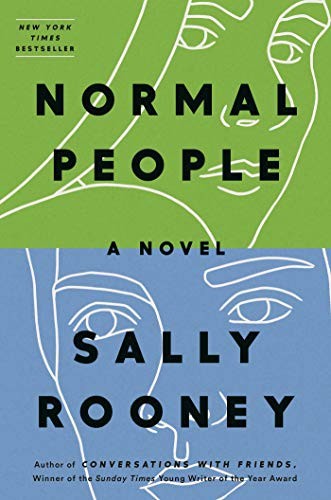
Normal People
by Sally Rooney
Life offers up these moments of joy despite everything.
Why read it
In school he's popular and she's untouchable-weird; at university the polarity flips. For a decade Connell and Marianne keep finding and losing each other — two people who fit perfectly and can't manage to say so. Rooney turned that ache into a generation's defining love story.
A love story told through class, silence, and the mutual construction of a self: working-class Connell and wealthy, damaged Marianne shape each other across school, Trinity College, and the years after. Rooney's real subject is the gap between what people feel and what they can say — and how power moves back and forth inside intimacy.
Rooney published it at 27, a year after Conversations with Friends, and it detonated: Booker longlist, global sales in millions, and a BBC/Hulu adaptation that became a pandemic-era phenomenon. It cemented her, willingly or not, as 'the first great millennial novelist.'
- 01
Two people, alternating chapters
The structure jumps months at a time between their perspectives — you'll watch the same relationship misread from both sides.
- 02
Class travels with you
Connell cleans up socially at Trinity but carries supermarket shifts and his mother's cleaning job in every conversation — money as the story's quiet weather.
- 03
The miscommunication is the point
Every rupture traces to a sentence not said; Rooney makes the reader feel exactly how reasonable each silence seemed.
- 04
Damage seeking damage
Marianne's history of family cruelty plays out in what she accepts from men — handled without melodrama, as pattern rather than plot twist.
The scholarship-day chapter: Connell, who never worries about rent again, understands in one afternoon what money means — and what Marianne has never had to think about.
A misunderstood sentence about summer housing — he can't afford Dublin rent, she hears rejection — separates them for a year. It's the novel's method in miniature: catastrophe by inference.