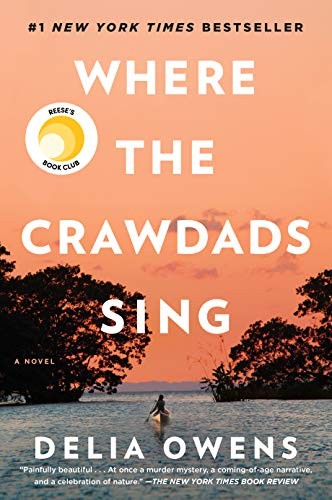
Where the Crawdads Sing
by Delia Owens
Autumn leaves don't fall, they fly. They take their time and wander on this their only chance to soar.
Why read it
A girl grows up alone in a North Carolina marsh, abandoned by everyone, raised by gulls, mud, and her own ferocious attention to the natural world. Years later, the town golden boy turns up dead — and the 'Marsh Girl' is the only suspect the town wants.
Half coming-of-age story, half murder trial, wrapped in some of the most loving nature writing in popular fiction. Owens braids two timelines — Kya's survival from age six and the 1969 death investigation — into a study of prejudice: what a community does to the person it has decided is other, and what that person learns from a marsh that never judges.
Owens was a wildlife scientist for decades — co-authoring bestselling memoirs of studying lions and elephants in Botswana and Zambia — before publishing this first novel at 69. Reese Witherspoon's book club ignited it; it became one of the best-selling novels of all time, with 18+ million copies and a 2022 film.
- 01
The marsh as teacher
Kya reads fireflies, feathers, and tides the way other children read books — Owens's zoology grounds every metaphor in real behavior, including the dark ones.
- 02
Loneliness as a force
The novel's real subject: what decades of abandonment do to a person's ability to trust — and what two very different men mean when they say they love her.
- 03
The trial
The courtroom chapters put the town itself on trial; the evidence against Kya is mostly the fact of her difference.
- 04
Nature's morality
The book keeps asking whether human ethics apply to survival — the final pages answer with a twist readers argue about for days.
Six-year-old Kya watches her mother walk down the sandy lane in alligator heels and not look back — the abandonment that opens the book and echoes through every relationship after.
Tate teaching Kya to read, starting with a sentence about doves — and her stunned realization that words on paper can hold everything: the scene that turns a survival story into a portrait of a naturalist being born.