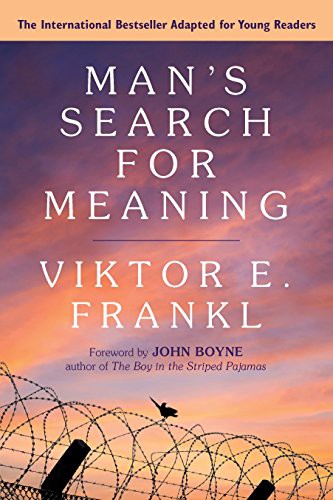
Man's Search for Meaning
Those who have a 'why' to live can bear with almost any 'how'.
Why read it
A psychiatrist loses his family, his manuscript, and his name to Auschwitz — and emerges arguing that even there, life never stopped having meaning. This is the rare book that is both historical testimony and a usable philosophy of survival.
Frankl's central claim, forged in the camps: the primary human drive is not pleasure (Freud) or power (Adler) but meaning. Everything can be taken from a person except the last freedom — choosing one's attitude in any given circumstances. Suffering without meaning is despair; suffering with meaning is endurable, even ennobling.
Frankl had a visa to America in 1941 but stayed in Vienna for his aging parents — a decision that led through four camps. He reconstructed the book in nine feverish days after liberation, originally publishing it anonymously. The second half distills logotherapy, the school of psychotherapy he founded on the conviction that meaning heals.
- 01
The last of the human freedoms
You'll see how prisoners who kept an inner purpose — a person to reunite with, work to finish — survived conditions that broke stronger bodies.
- 02
Meaning has three sources
Work that matters, love for another person, and the attitude taken toward unavoidable suffering — meaning is available even when happiness is not.
- 03
The existential vacuum
Frankl diagnoses modern boredom and Sunday-afternoon emptiness as a meaning deficit — decades before anyone called it burnout.
- 04
Tragic optimism
How to say yes to life in spite of pain, guilt, and death — optimism that has looked directly at the worst and is therefore not naïve.
Marching to a work site in the freezing dark, Frankl conjures an image of his wife's face and understands, mid-agony, that "the salvation of man is through love and in love" — not knowing she was already dead.
A grieving doctor couldn't recover from his wife's death until Frankl asked one question: "What would have happened if you had died first?" His suffering suddenly had a purpose — sparing her this pain — and became bearable.