Theo Bennett★ Reader · Lv 2
3 months agoRewired how I think about, well, everything. Ambitious and readable.
You could never convince a monkey to give you a banana by promising him limitless bananas after death in monkey heaven.
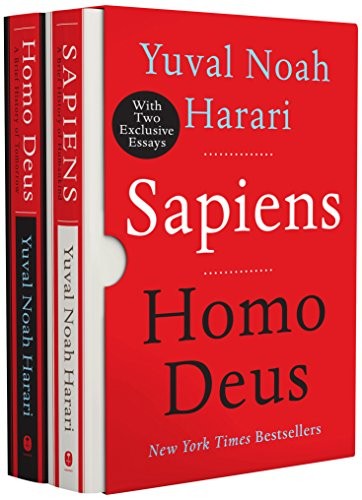
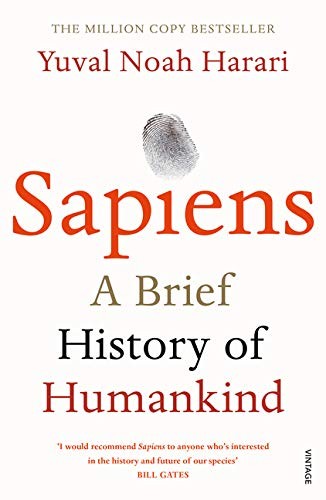
Seventy thousand years ago our ancestors were an unremarkable species of ape in a corner of Africa. Sapiens asks the biggest question available — how did we end up running the planet? — and answers it in one exhilarating sweep.
Harari's core argument: Homo sapiens conquered the world because we alone cooperate flexibly in huge numbers, and we do it through shared fictions — gods, nations, money, corporations, human rights. None exist in nature; all exist because millions believe in them together. Three revolutions — Cognitive, Agricultural, Scientific — mark how those fictions scaled.
The book began as a world-history survey Harari taught at the Hebrew University of Jerusalem, compressed from decades of scholarship into lectures for undergraduates who had never studied history. Published in Hebrew in 2011, it became a global phenomenon after the 2014 English edition — recommended by everyone from Obama to Zuckerberg.
You'll never look at a company, a currency, or a border the same way — they function only because we collectively agree to pretend they're real.
Wheat domesticated us: farmers worked harder, ate worse, and died younger than foragers — but fictions like property and religion could finally scale.
The only story everyone believes: money is the most successful fiction ever invented, trusted across every border and religion.
Modern science started when Europeans admitted 'we don't know' — and empire, capital, and curiosity formed a feedback loop that reshaped the planet.
Peugeot exists — but where? Not its cars, factories, or employees, all replaceable. It's a 'legal fiction' conjured by ritual paperwork, and it commands more loyalty than most real things. Harari uses it to show fictions run our economy.
The Universal Declaration of Human Rights, biology's greatest heresy: cut open a human and you find no rights inside. Yet this shared myth restrains armies more effectively than walls ever did.
Rewired how I think about, well, everything. Ambitious and readable.