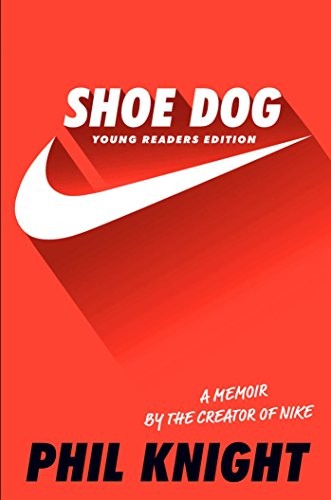
Shoe Dog
by Phil Knight
The cowards never started and the weak died along the way. That leaves us.
Why read it
Before Nike was a $100-billion swoosh, it was a 24-year-old with a crazy idea, a $50 loan from his father, and a trunk full of Japanese running shoes. Shoe Dog is the honest version of the founding story — the one with near-bankruptcies every single year.
Knight's memoir dismantles the myth of the visionary founder. Nike survived on improvisation, loyalty, and nerve: a decade of borrowing against everything, betrayal by its Japanese supplier, federal lawsuits, and a band of misfits who loved the mission more than the odds. The through-line is Knight's own advice: let everyone else call your idea crazy — just keep going.
Knight wrote the book in his seventies, decades after stepping back from Nike, with the help of a Pulitzer-winning collaborator. Freed from investor relations, he tells the unflattering truths: the lies he told his Japanese suppliers, the years Nike was functionally insolvent, and the cost his obsession imposed on his family.
- 01
Start before you're ready
Knight sold shoes from his Plymouth Valiant at track meets while working as an accountant — the 'crazy idea' ran on nights and weekends for years.
- 02
Growth can kill you
You'll understand cash-flow terror from the inside: Nike doubled sales every year and was perpetually one late shipment from collapse.
- 03
Hire believers, not résumés
Nike's early leadership was a paralyzed lawyer, an overweight accountant, and a compulsive letter-writer — united by irrational devotion.
- 04
The supplier betrayal
When Onitsuka tried to seize distribution, Knight had secretly developed his own brand — the origin of the swoosh, born of paranoia and necessity.
The swoosh logo was bought from design student Carolyn Davidson for $35. Knight's verdict at the time: 'I don't love it, but it'll grow on me.' The name 'Nike' came in a dream to employee Jeff Johnson — Knight preferred 'Dimension Six.'
In 1975, Nike's bank abruptly cut it off and called the FBI, suspecting fraud. The company was saved by a Japanese trading firm that examined the books and decided Knight's people — not his balance sheet — were worth backing.