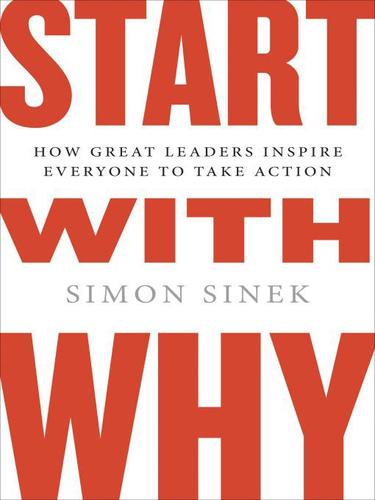
Start with Why
by Simon Sinek
People don't buy what you do; they buy why you do it.
Why read it
Why did Apple, Harley-Davidson, and Martin Luther King inspire fanatical loyalty while equally resourced competitors got customers at best? Sinek's answer fits in three words — people don't buy what you do, they buy why you do it.
Every organization knows what it does, some know how, very few can articulate why — the purpose beyond profit. Sinek's Golden Circle says influence flows from the inside out: leaders who start with why speak to the part of the brain that governs trust and decisions, which is why purpose-driven organizations command loyalty that features and price never buy.
Sinek developed the Golden Circle after losing his own passion for work and asking why some leaders energize while others merely manage. His 2009 TED talk on the idea became one of the most-watched of all time, and the book expands it with the biology of limbic-brain decision-making and case studies from aviation to civil rights.
- 01
The Golden Circle
Why → How → What: you'll learn to communicate in that order, the way inspiring organizations do, instead of leading with specs like everyone else.
- 02
The biology of loyalty
Decisions are made in the limbic brain — the part with no capacity for language. That's why gut-level 'why' messaging beats rational feature lists.
- 03
The celery test
A filter for every decision: if someone watched your choices at the supermarket, could they infer your why? Consistency is what makes belief credible.
- 04
Why manipulation isn't leadership
Price drops, promotions, and fear all move product — once. Sinek maps why manipulation produces transactions while purpose produces movements.
In 1900, the well-funded, press-followed Samuel Langley raced the unknown Wright brothers to powered flight. The Wrights, fueled by belief rather than fame, won — and Langley quit the field the day they flew, revealing what he'd really been chasing.
Apple's 1984 and Think Different campaigns never mentioned processor speeds. Sinek dissects how a computer company convinced the world it sells rebellion — and why people queue overnight for products they haven't seen.