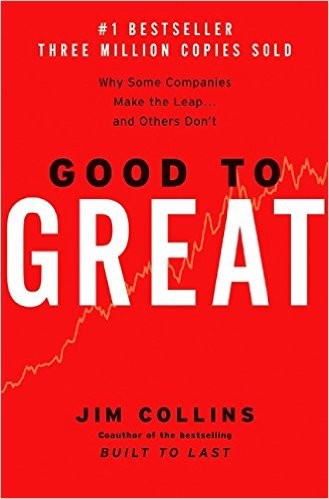
Good to Great
by Jim Collins
Good is the enemy of great.
Why read it
Why do some perfectly average companies become market-crushing machines while their identical-looking competitors stay mediocre forever? Collins spent five years and 15,000 hours of research to answer exactly that.
Greatness is not a function of circumstance — it's a matter of conscious choice and discipline. From 1,435 companies, Collins's team isolated 11 that made the leap to sustained exceptional returns and reverse-engineered what they shared: humble-but-driven leaders, the right people before the right strategy, brutal honesty about facts, and relentless consistency inside a simple concept.
After Built to Last, a McKinsey partner told Collins the book was useless: the companies in it were always great. What about the rest of us? Collins assembled a 21-person research team and spent five years comparing companies that transformed against near-identical ones that didn't — making this one of the largest empirical studies in business literature.
- 01
Level 5 Leadership
The best-performing CEOs weren't celebrities — they were a paradoxical blend of personal humility and ferocious professional will, more plow horse than show horse.
- 02
First who, then what
Get the right people on the bus before deciding where to drive it — great companies hired for character and trained for skill.
- 03
The Hedgehog Concept
Sustained greatness comes from the intersection of three circles: what you can be best in the world at, what drives your economics, and what you're passionate about.
- 04
The Flywheel
There is no single defining moment or miracle breakthrough — transformation is thousands of consistent pushes that eventually build unstoppable momentum.
Walgreens, a sleepy drugstore chain, beat the general market 15-fold over 25 years by ruthlessly applying one idea — the best, most convenient drugstores with high profit per customer visit — while rival Eckerd chased acquisitions and died.
Darwin Smith, the mild-mannered CEO of Kimberly-Clark, made the era's gutsiest call: selling the company's legacy paper mills to bet everything on consumer brands. Wall Street mocked it; the stock went on to beat the market 4× over 20 years.