Miles Ovadia★ Curator · Lv 5
3 months agoContrarian and quotable — the startup book I re-read most.
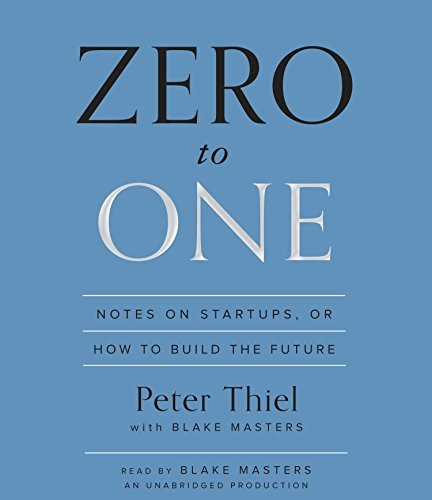
by Peter Thiel
What important truth do very few people agree with you on?
Copying what works takes the world from 1 to n. Creating something new takes it from 0 to 1 — and Thiel's contrarian manifesto argues that everything about how we teach competition, business, and progress points founders in the wrong direction.
Competition is for losers: profits get competed away in crowded markets, so durable value comes from building a creative monopoly — something so good and so new that no one offers a substitute. Thiel's framework: start small and dominate a niche, scale concentrically, build proprietary advantages, and hold a definite view of the future when everyone else hedges.
The book grew from notes Blake Masters took in Thiel's 2012 Stanford startup course, which went viral online. Thiel — PayPal co-founder, first outside investor in Facebook, Palantir chairman — turned them into the most argued-about startup book of its decade.
You'll learn to read through both lies — monopolists claiming competition and competitors claiming uniqueness — and why margins tell the truth.
'What important truth do very few people agree with you on?' — the interview question that doubles as a filter for real opportunities.
Being first matters less than being the last company standing in your market; the value is in decades of future cash flow.
Thiel's diagnosis of the modern West: we expect the future to be better but have no plan for it — and startups are where definite plans still live.
One investment outperforms all others combined; one distribution channel works; one market is right. Diversification is what you do when you don't know.
Airlines move millions of people and earn ~37 cents per passenger; Google earns a quarter of every search dollar. Same economy, opposite structures — the cleanest illustration of why competition destroys profit and monopoly funds the future.
PayPal's 'mafia' — Musk, Hoffman, the YouTube and Yelp founders — as a case study in what Thiel calls founding culture: hire people who prefer one shared mission to balanced, replaceable professionalism.
Contrarian and quotable — the startup book I re-read most.